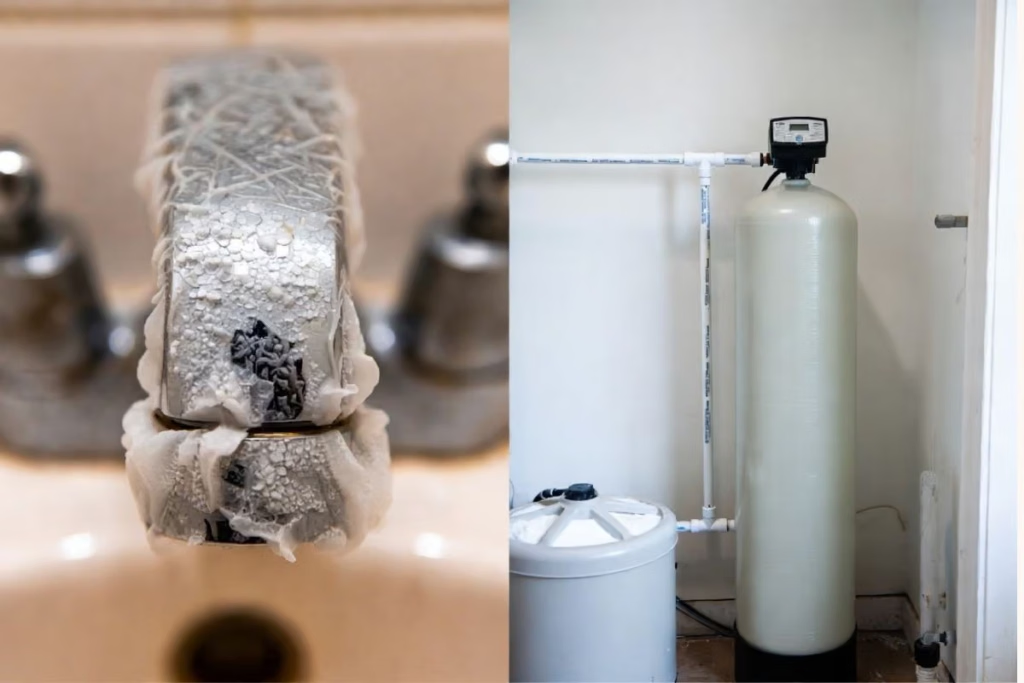
There’s something annoying about spotting white mineral deposits on a faucet you’ve only just cleaned. Then there’s the kettle that needs descaling again and the showerhead that seems to spray in every direction except the right one. Individually, these problems aren’t particularly serious. Together, though, they can make household maintenance feel like a never-ending job.
For homeowners looking to reduce hard water scale with softening, addressing the mineral content of incoming water offers a more practical approach than repeatedly scrubbing away existing deposits.
Across Cedar Rapids and Eastern Iowa, understanding your household’s water conditions can help you choose treatment that makes cleaning easier, supports appliance maintenance, and brings a little more comfort into everyday life.
Why Limescale Is More Than Just an Eyesore
Those chalky white marks around bathroom fixtures are often caused by dissolved calcium and magnesium. Water naturally collects these minerals as it moves through soil and rock formations.
When water evaporates, mineral residue may remain on surfaces. Heating water can encourage scale formation, which explains why deposits are frequently found inside kettles and water heaters.
The visible buildup is inconvenient enough, but deposits inside household equipment deserve attention as well.
Over time, accumulated scale may interfere with heat transfer or restrict flow through smaller plumbing components.
Regular cleaning helps manage existing deposits. However, reducing excessive hardness addresses the conditions responsible for their continued formation.
Finding a Long-Term Answer to Hard Water Problems
Many households rely on vinegar, descaling products, and specialized bathroom cleaners to keep mineral deposits under control. These products have their place, but they don’t change the water entering your home.
Appropriate water softening solutions focus on reducing dissolved hardness minerals before water reaches connected household fixtures and appliances.
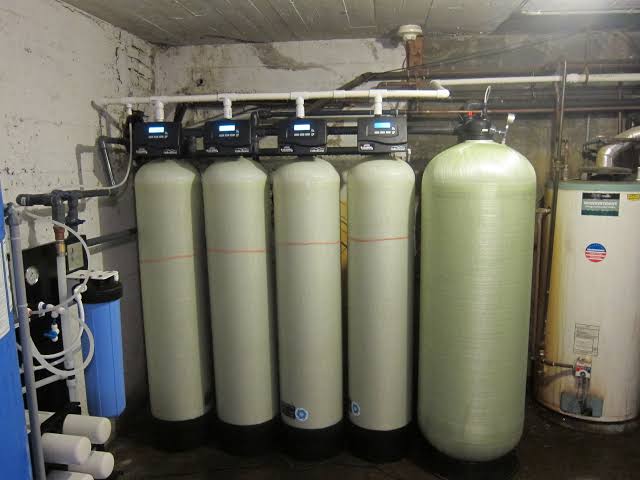
Conventional softeners use specialized resin beads that exchange calcium and magnesium ions for sodium or, in compatible systems, potassium ions.
The resin periodically regenerates to restore its treatment capacity, allowing the equipment to continue supplying softened water.
Once properly installed and programmed, most conventional systems operate automatically.
Rather than constantly dealing with the aftermath of hard water, homeowners can take a more preventive approach that requires relatively little daily involvement.
Choosing a Softener Without Overspending
Shopping for water treatment equipment can become confusing rather quickly. Different models offer varying capacities, controls, regeneration methods, and efficiency features.
When comparing water softeners for homes, start with measured hardness levels and realistic household water consumption rather than focusing exclusively on equipment size or price.
A busy family with several bathrooms may need greater treatment capacity than a household with only two occupants.
Demand-initiated regeneration can help avoid unnecessary treatment cycles by monitoring water consumption and remaining capacity.
Consider maintenance accessibility as well. You’ll appreciate having enough space to replenish salt without moving half the contents of your utility room.
The best system isn’t necessarily the most expensive one. It’s the one that comfortably handles your household’s requirements.
Giving Your Appliances a Better Chance at Long-Term Performance
Imagine purchasing a new water heater and continuing to supply it with the same excessively hard water that contributed to problems with your previous equipment.
It’s an easily overlooked consideration.
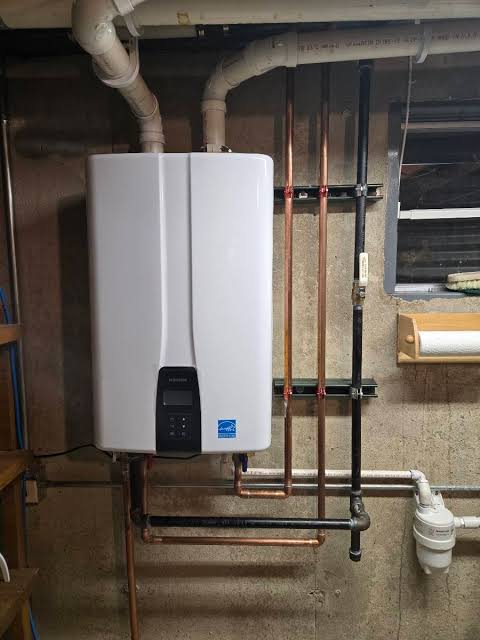
Mineral scale can gradually accumulate inside water-heating appliances, potentially affecting heat transfer and increasing maintenance requirements.
Appropriate softening helps limit new scale formation, although it won’t automatically repair damage that has already occurred.
Dishwashers and washing machines may also benefit from reduced hardness, particularly when cleaning products are used according to recommendations for softened water.
If you’re planning a kitchen renovation or replacing older appliances, checking your water hardness beforehand could be a sensible preventive measure.
Small Improvements That Make Everyday Chores Easier
Not every benefit of softer water needs to involve expensive machinery or complicated technical explanations.
Consider washing your hands. Soap may lather more readily in softened water, making the experience noticeably different. Laundry detergents can also perform differently when excessive hardness is reduced.
Then there’s bathroom maintenance. Fewer new hardness-related deposits may mean less frequent descaling of faucets and shower doors.
Of course, softened water doesn’t eliminate every type of residue or household cleaning requirement. You’ll still need to clean regularly.
But there’s a meaningful difference between ordinary cleaning and constantly battling stubborn mineral buildup.
For busy families, even a modest reduction in repetitive household chores can be genuinely worthwhile.
Getting Reliable Results Through Testing and Maintenance
Before installing softening equipment, arrange a reliable hardness assessment. Water conditions can differ between municipal supplies and private wells throughout Cedar Rapids and Eastern Iowa.
When consulting a provider such as Waterhouse Water Systems, ask how measured hardness influences equipment capacity, salt requirements, and regeneration settings.
Discuss ongoing servicing expenses and documented efficiency rather than relying solely on promotional claims.
After installation, follow manufacturer recommendations for replenishing salt and maintaining the equipment. Periodic hardness testing can help confirm that treatment continues performing as intended.
It’s also worth remembering that softening doesn’t provide comprehensive drinking water purification. Additional filtration may be necessary when testing identifies unrelated water quality concerns.
Making More Time for the Things You Enjoy
Homeownership comes with plenty of responsibilities already. Constantly removing mineral deposits shouldn’t have to become another demanding weekend activity.
With reliable testing, appropriately selected equipment, and consistent maintenance, families throughout Eastern Iowa can take a more practical approach to managing excessive hardness.
Perhaps the biggest reward isn’t a sparkling faucet or a cleaner shower door. It’s having a little more time to spend with family, explore the outdoors, or simply enjoy a quiet Sunday afternoon.
Better water can support a more comfortable home without demanding constant attention. And sometimes, the most valuable household improvements are the ones that make life’s ordinary responsibilities a little easier to manage.