water problem diagnosis
There’s a quiet kind of independence that comes with having well water. No municipal lines, no monthly water bill tied to usage—just your own source, right beneath your feet.
But that independence also comes with a trade-off. You’re not just using the water—you’re responsible for understanding it.
And most people don’t realize that at first.
It usually starts with something small. A slight discoloration. A taste that feels a bit different from what you expected. Or maybe just a lingering thought: “Is this really as clean as it looks?”
That’s when curiosity begins to take over.
The Reality of Well Water (It Changes More Than You Think)
Unlike treated city water, well water isn’t consistent. It shifts depending on seasons, rainfall, soil conditions—even nearby activity you might not be aware of.
One month, everything feels perfect. The next, something changes.
And because those changes are often subtle, they can be easy to overlook at first. But over time, they become harder to ignore.
You notice stains in your sink. You smell something faint but unfamiliar. Your appliances don’t seem to run as smoothly as they used to.
These are the kinds of signs that make people stop and pay attention.
Understanding Before Fixing
One of the biggest mistakes homeowners make is jumping straight into solutions.
They hear about filters, systems, treatments—and they want to fix things immediately.
But here’s the thing: without understanding what’s actually going on, it’s just guesswork.
That’s where water problem diagnosis becomes essential. It’s not about overcomplicating things—it’s about identifying what’s really in your water and how it’s affecting your home.
Once you have that clarity, everything else starts to make sense.
Not Every Solution Fits Every Well
Here’s something that surprises a lot of people: there’s no universal fix for well water.
What works perfectly for one home might not work at all for another.
That’s because every well is different. Different mineral levels. Different contaminants. Different usage patterns.
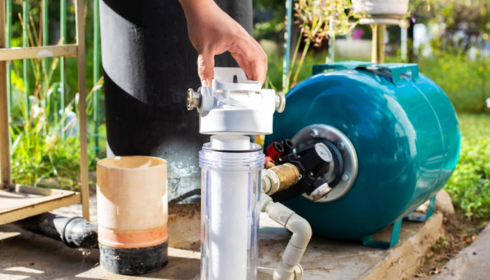
This is why well water custom systems are often the most effective approach. Instead of applying a general solution, they’re designed around your specific needs.
And that difference—between generic and tailored—can be significant.
Because when a system fits your water, it works with it, not against it.
The Idea of Going Deeper
Some water issues are obvious. Others are hidden.
You might notice stains or smells right away. But what about the things you can’t see? The fine particles, the dissolved elements that affect taste and performance over time?
That’s where deep clean filtration comes into play.
It’s not just about making water look clean—it’s about addressing what’s beneath the surface. Removing what doesn’t belong, refining what remains.
And when that happens, the difference isn’t just visible—it’s something you can feel.
The Changes That Sneak Up on You
What’s interesting about improving well water is how gradual the impact feels.
There’s no big moment where everything suddenly changes.
Instead, it’s a series of small improvements.
Your water smells neutral. Your fixtures stay cleaner. Your laundry feels softer.
You stop thinking about your water altogether—and that’s when you know it’s working.
Because the goal isn’t to constantly notice your water. It’s to trust it enough that you don’t have to.
It’s Not About Perfection
There’s a temptation to aim for perfect water.
To eliminate every possible impurity, to create something completely pure.
But in reality, that’s not always necessary.
What most homes need isn’t perfection—it’s balance.
Water that’s clean enough to use comfortably. Consistent enough to rely on. Free from the issues that cause inconvenience or concern.
And achieving that doesn’t require the most advanced system on the market. It requires the right system for your situation.
Maintenance: Simpler Than It Sounds
If there’s one thing that holds people back, it’s the idea of maintenance.
They imagine complicated systems, constant upkeep, technical challenges.
But most modern setups are designed to be manageable.
You test your water occasionally. Replace filters when needed. Keep an eye on performance.
That’s it.
It becomes part of your routine, not something that disrupts it.
A Different Relationship With Water
Living with well water changes how you think about something most people take for granted.
You become more aware. More involved.
And while that might sound like extra work, it often feels like the opposite.
Because when your water is balanced and reliable, it stops demanding your attention.
It simply supports your daily life, quietly and consistently.
A Final Thought That Feels Honest
Water is easy to overlook because it’s always there.
But when you rely on your own source, you start to see it differently.
Not just as something that flows from a tap, but as something that deserves a bit of understanding.
Not constant attention. Not overthinking.
Just enough awareness to make sure it’s doing what it should.
And when it is, you stop noticing it again.
Which, in a way, is the best outcome you could hope for.