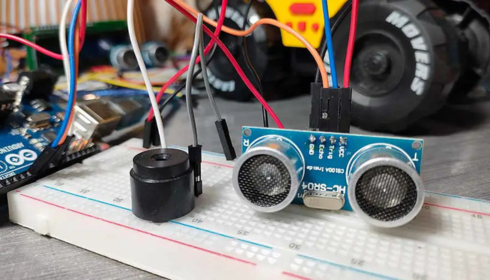
Technology doesn’t always need to be complicated to feel powerful. Sometimes, a couple of small components are enough to create something surprisingly intelligent. If you’ve ever explored DIY electronics or robotics, chances are you’ve come across the bluetooth module and ultrasonic sensors. These two components are widely used, beginner-friendly, and incredibly useful for building real-world projects.
Understanding Wireless Communication in Projects
At its core, a bluetooth module is designed to enable wireless communication between devices. It allows your microcontroller—like Arduino—to connect with smartphones, laptops, or other Bluetooth-enabled gadgets. This removes the need for messy wires and opens the door to remote control and monitoring.
What makes this component especially appealing is how easy it is to use. Most modules communicate through serial ports, meaning you can send and receive data using simple commands. Whether you’re turning LEDs on and off, controlling a motor, or building a home automation system, the bluetooth module makes interaction seamless.
For example, imagine creating a smart lighting system where you can control your room lights through a mobile app. With this module, you don’t need complex infrastructure—just a simple connection and some code. It’s this simplicity that makes it so popular among beginners and professionals alike.
How Ultrasonic Sensors Detect the World
While communication is important, sensing the environment is equally critical. ultrasonic sensors are designed to measure distance using high-frequency sound waves. They send out ultrasonic pulses and wait for the echo to bounce back from nearby objects. By calculating the time taken for the echo to return, the sensor determines how far away the object is.
These sensors are known for their accuracy and reliability, especially in short-range applications. They work well in robotics, obstacle detection, water level measurement, and even security systems. Unlike infrared sensors, they are less affected by lighting conditions, which makes them more dependable in various environments.
A common example is an obstacle-avoiding robot. As the robot moves forward, the ultrasonic sensor continuously scans for objects. When it detects something in its path, it signals the system to stop or change direction. This simple mechanism can prevent collisions and improve efficiency.
Combining Both for Smarter Applications
The real magic happens when you combine both technologies. While ultrasonic sensors gather data about the surroundings, the bluetooth module transmits that data wirelessly. Together, they create a system that not only senses but also communicates in real time.
Consider a smart parking system. The ultrasonic sensor measures the distance between a car and an obstacle, while the Bluetooth module sends that information to your phone. You can monitor the distance without stepping out of the vehicle, making parking easier and safer.
Another example is home automation. You could build a system where ultrasonic sensors detect movement or proximity, and based on that input, your lights or appliances respond. Using Bluetooth, you can also override or control the system manually through your phone.
Why These Components Are Perfect for Beginners
One of the biggest advantages of using these components is their accessibility. Both are affordable, widely available, and supported by countless tutorials online. You don’t need advanced technical knowledge to get started. With basic programming skills and a little curiosity, you can build impressive projects.
They also provide a great learning experience. Working with a bluetooth module teaches you about wireless communication protocols, while ultrasonic sensors introduce you to real-time data processing and measurement techniques. Together, they offer a balanced understanding of both input and output systems.
Final Thoughts
In the world of electronics, innovation often begins with simple ideas. Components like the bluetooth module and ultrasonic sensors make it easier than ever to turn those ideas into reality. Whether you’re building a small DIY project or experimenting with advanced concepts, these tools give you the flexibility to explore, learn, and create something meaningful.