dog agility courses for beginners
Dog agility training is more than just a fun activity it’s a way to strengthen the bond between you and your canine companion while providing both physical exercise and mental stimulation. At Rob’s Dog Training, we specialize in introducing dogs and owners to dog agility courses for beginners with techniques that are safe, effective, and enjoyable.
If you’re new to agility training, it’s normal to feel overwhelmed. Between tunnels, weave poles, and jumps, the obstacles may seem complex but with the right guidance, both you and your dog can succeed and even thrive. In this guide, we’ll explore the fundamentals of agility training, how to get started, and practical tips to ensure a positive learning experience.
Why Dog Agility Courses for Beginners Are Beneficial
Agility training offers far-reaching benefits for both dogs and their owners:
- Physical exercise: Agility provides a full-body workout, improving your dog’s strength, coordination, and stamina.
- Mental stimulation: Navigating obstacles requires focus and problem-solving, keeping your dog mentally sharp.
- Bonding opportunities: Training sessions create trust and communication, deepening the connection between you and your pet.
- Behavioral improvement: Dogs with excess energy or anxiety often show improved behavior after regular agility exercises.
Research into canine behavior consistently highlights the value of structured activities that combine learning, movement, and social interaction. For beginners, agility courses serve as a fun introduction to structured training while building confidence in your dog.
Essential Equipment for Beginners
You don’t need a full professional course to start. For beginner-friendly dog agility courses, consider these key pieces of equipment:
- Jump bars: Lightweight bars that can be adjusted to different heights.
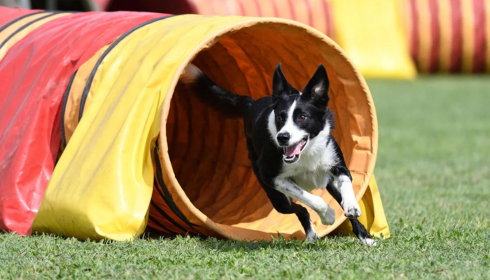
- Tunnels: Collapsible tunnels encourage dogs to move through confined spaces confidently.
- Weave poles: Start with a small set to teach basic weaving techniques.
- Pause tables: Low platforms where dogs learn to stop and focus, teaching control and patience.
Tip: Ensure all equipment is safe, stable, and appropriate for your dog’s size. Introducing obstacles gradually helps prevent fear and frustration.
Step-by-Step Training for Beginners
Starting with agility training requires a patient, consistent approach. Here’s how to structure your sessions:
Step 1: Build Basic Obedience Skills
Before attempting agility, your dog should reliably respond to foundational commands such as:
- Sit
- Stay
- Come
- Heel
These commands create a strong foundation, making it easier to guide your dog through obstacles without confusion.
Step 2: Introduce Obstacles Gradually
Start with one obstacle at a time. For example, begin with a low jump:
- Encourage your dog to approach the jump using treats or toys.
- Reward your dog immediately after successfully completing the obstacle.
- Repeat several times before adding another obstacle.
Gradually combining obstacles into simple sequences builds your dog’s confidence and coordination.
Step 3: Focus on Positive Reinforcement
Agility training thrives on positive reinforcement. Rewarding effort and success encourages your dog to try again:
- Treats for completing obstacles
- Praise and verbal encouragement
- Short play sessions as a reward
Avoid scolding or punishment. Negative reinforcement can create anxiety and slow progress.
Step 4: Build Sequences
Once your dog is comfortable with individual obstacles, you can create short sequences. Start with two or three obstacles, guiding your dog through each while maintaining a calm, encouraging tone. Use consistent cues and body language to direct them smoothly from one obstacle to the next.
Common Challenges and How to Overcome Them
Even in beginner courses, challenges are normal. Here’s what to expect and how to address them:
- Fear of obstacles: Introduce obstacles gradually and use treats or toys to encourage exploration.
- Distraction: Keep early sessions short (5–10 minutes) and limit outside stimuli.
- Jumping or skipping obstacles: Break sequences into smaller parts and reinforce correct behavior before combining them.
- Fatigue: Watch your dog for signs of tiredness. Agility is mentally and physically demanding.
Consistency and patience are key. Regular short sessions are more effective than occasional long ones.
Choosing the Right Dog Agility Course for Beginners
Not all agility courses are created equal. When selecting a course:
- Check instructor experience: Look for trainers with certifications and proven experience in beginner agility.
- Evaluate course size: Ensure the space allows for safe movement and gradual obstacle introduction.
- Consider class structure: Small groups offer more personalized attention, improving learning outcomes.
- Ask about progression: Courses should allow your dog to advance at a comfortable pace.
At Rob’s Dog Training, our courses are designed specifically for beginners, balancing safety, fun, and skill development.
Safety Tips for Beginner Agility Training
Safety should always come first. Keep these tips in mind:
- Warm up your dog before each session to prevent injuries.
- Avoid slippery surfaces or unstable obstacles.
- Monitor your dog’s weight and health; agility is intense for young or overweight dogs.
- Keep sessions short to prevent overexertion.
Proper equipment maintenance and environment checks help minimize risks and ensure a positive experience.
Building Confidence Through Training Games
Agility isn’t just about obstacles it’s also about confidence and problem-solving. Incorporate simple games into training:
- Target practice: Teach your dog to touch a target with its paw or nose.
- Tunnel races: Time how long it takes your dog to run through tunnels.
- Obstacle memory: Guide your dog through sequences, gradually removing visual cues.
Games make learning fun and reinforce skills in a stress-free way, ideal for beginner agility enthusiasts.
The Role of Consistency and Routine
Dogs thrive on predictable routines. Establishing a consistent training schedule enhances skill retention and confidence:
- Train 2–3 times per week for short sessions.
- Always use the same cues for obstacles.
- Keep a progress log to track improvement and identify areas needing more focus.
Routine also helps reinforce obedience and behavioral skills, making future agility training smoother.
When to Consider Professional Guidance
Even in beginner courses, some dogs may need extra support. Seek professional guidance if:
- Your dog shows persistent fear or aggression around obstacles.
- Progress stalls despite consistent practice.
- You want to advance to higher-level competitions safely.
Certified trainers can tailor strategies to your dog’s needs, ensuring safe and effective progression.
Encouraging Lifelong Agility Enthusiasm
Agility training is more than a one-time activity it can be a lifelong pursuit. Key ways to keep your dog engaged include:
- Regularly rotating obstacles to maintain interest.
- Introducing new sequences and challenges.
- Participating in beginner-friendly competitions for socialization and motivation.
- Celebrating milestones with rewards and recognition.
Positive experiences today foster enthusiasm, confidence, and resilience in dogs for years to come.
Why Rob’s Dog Training is the Best Choice
Located in Phoenix, AZ, Rob’s Dog Training has been helping dogs and owners navigate dog agility courses for beginners with:
- Certified and experienced trainers
- Structured programs tailored to all breeds and sizes
- Focus on safety, fun, and skill-building
- Supportive learning environment for owners and dogs alike
Whether you’re seeking to improve your dog’s physical fitness, mental stimulation, or confidence, our beginner-friendly courses provide everything needed to start your agility journey successfully.